Imagine your restaurant on a busy Saturday night, the place is packed, diners are engaged in conversation at tables, while others stand near the bar, yet the atmosphere remains intimate and composed rather than chaotic. The visual key to this acoustic control is the integration of architectural textures: the ceiling features prominent linear wood slats, while the walls are adorned with textured, fabric-like panels that soften the hard surfaces typically found in such venues.
In a crowded space like this, the primary enemy of comfort is Reverberation. When sound waves (from voices, clinking glasses, footsteps) hit hard surfaces like drywall, glass, or concrete, they bounce back into the room, building up energy and raising the Sound Pressure Level (SPL). This forces patrons to speak louder to be heard (the “Lombard Effect”), creating a feedback loop of escalating noise.
The treatments shown in the image lower SPL by absorption. Instead of reflecting sound energy back into the room, porous materials allow sound waves to penetrate them. The friction inside the material converts that sound energy into minute amounts of heat, effectively “killing” the reflection. By reducing the reverberation time, the background noise floor drops, allowing conversations to remain intelligible at normal speaking volumes.

Based on the materials and design elements shown, here are the types of acoustic products that would be used to achieve the warm aesthetic and sound performance in the space:
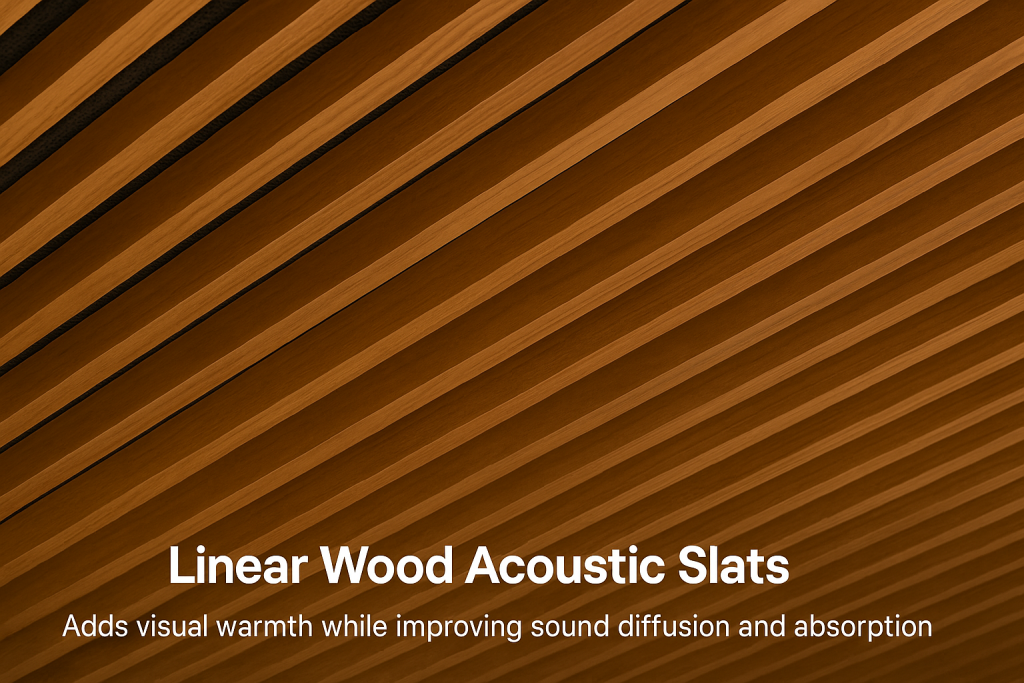
The ceiling features linear wood slats that provide a premium, upscale look. These systems can be installed with acoustical backers or over an open plenum so sound passes between the slats and is absorbed above—preventing the ceiling from acting as a large reflective surface.
Role: Adds visual warmth while improving sound diffusion and absorption.
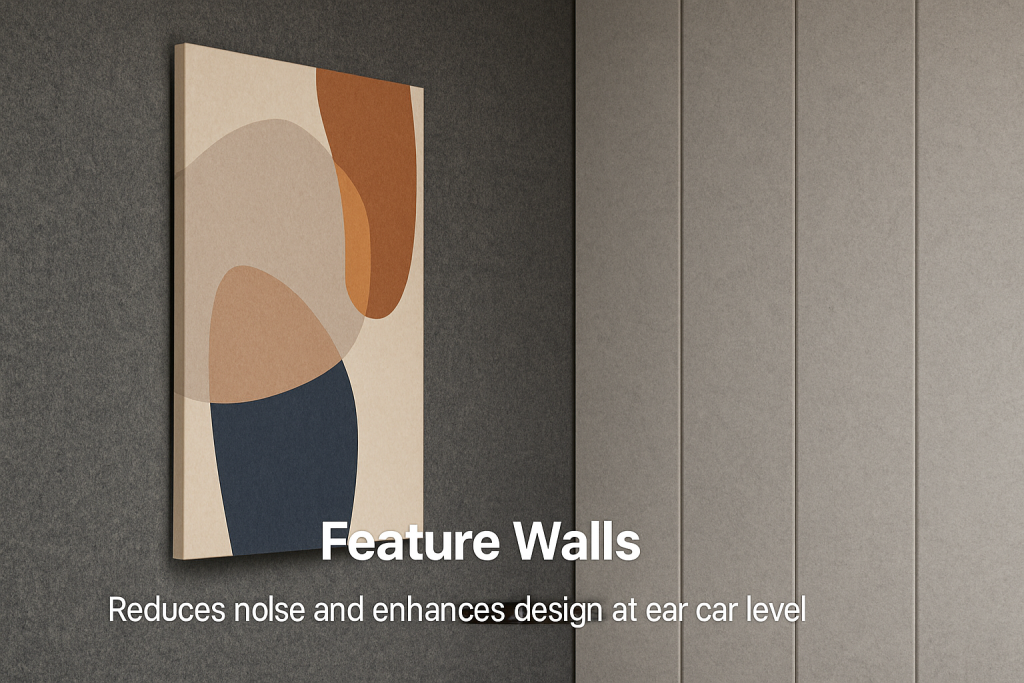
The textured wall elements and soft wall surfaces resemble direct-attach felt acoustic panels. These panels, made from dense PET felt or similar materials, provide high sound absorption while adding a modern, tactile finish that elevates the design.
Role: High-performance sound absorption placed at ear level, where most chatter and reflections occur.
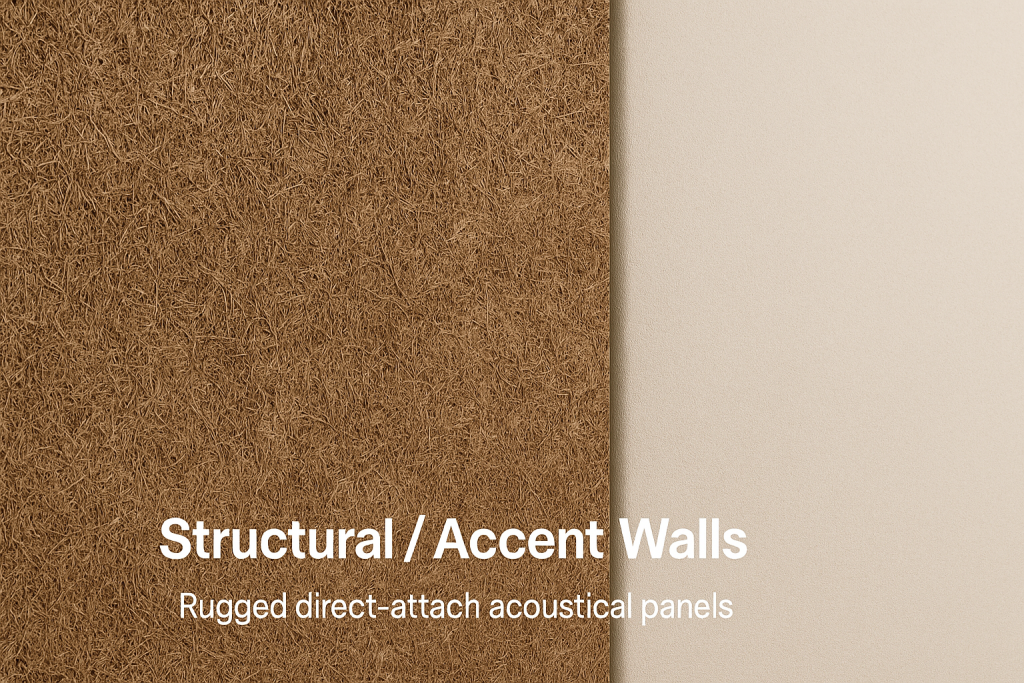
For areas needing greater durability—such as near walkways, the bar, or high-traffic zones—wood-fiber or composite acoustic panels are often used. These panels offer a range of textures and are extremely impact-resistant while still delivering meaningful sound reduction.
Role: Rugged acoustic treatment that blends naturally into the environment while controlling noise.
Based on the materials and design elements shown, here are the types of acoustic products that would be used to achieve the warm aesthetic and sound performance in the space:
The ceiling features linear wood slats that provide a premium, upscale look. These systems can be installed with acoustical backers or over an open plenum so sound passes between the slats and is absorbed above—preventing the ceiling from acting as a large reflective surface.
Role: Adds visual warmth while improving sound diffusion and absorption.
The textured wall elements and soft wall surfaces resemble direct-attach felt acoustic panels. These panels, made from dense PET felt or similar materials, provide high sound absorption while adding a modern, tactile finish that elevates the design.
Role: High-performance sound absorption placed at ear level, where most chatter and reflections occur.
For areas needing greater durability—such as near walkways, the bar, or high-traffic zones—wood-fiber or composite acoustic panels are often used. These panels offer a range of textures and are extremely impact-resistant while still delivering meaningful sound reduction.
Role: Rugged acoustic treatment that blends naturally into the environment while controlling noise.